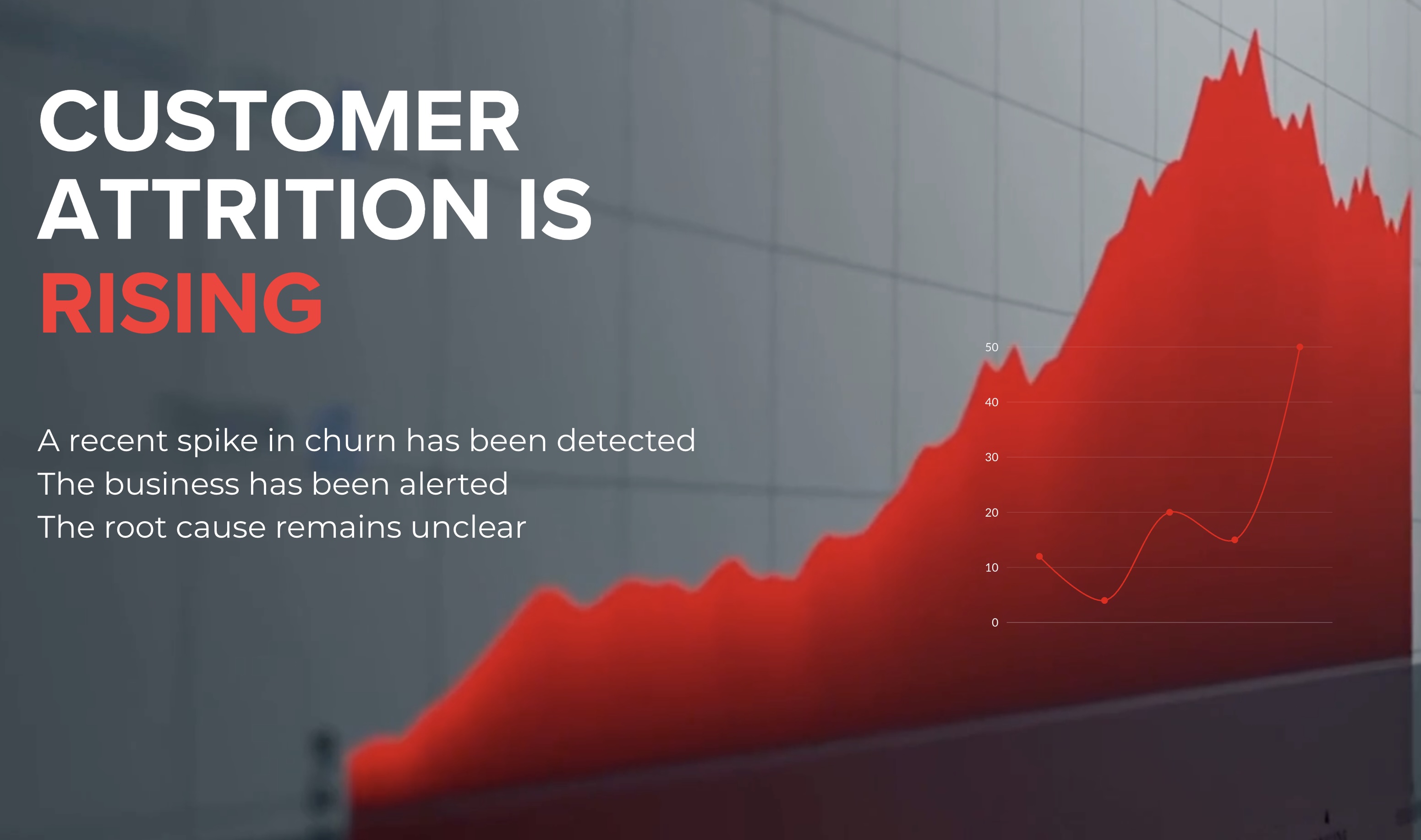
Churn begins to rise.
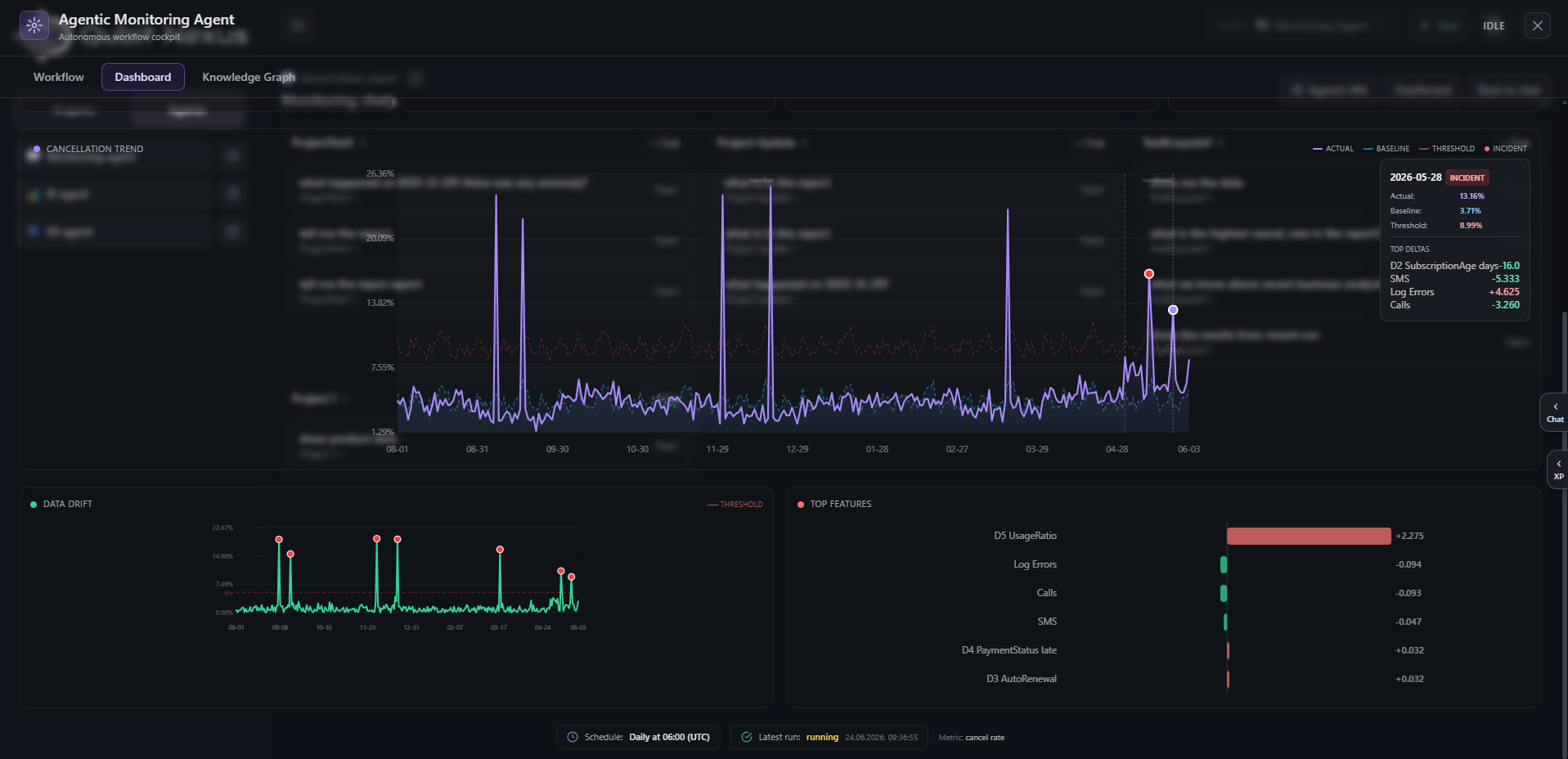
The agent watches continuously and flags the incident the moment attrition breaks trend.
A domain-specific monitoring workflow that helps CX and retention teams detect attrition risk earlier, investigate likely drivers, preserve business context, and turn every run into reusable organizational knowledge.
From the moment attrition begins to rise, to the action that reaches the right team.
The agent watches continuously and flags the incident the moment attrition breaks trend.
Top drivers surface with evidence — no manual pulls, no guessing.
Recommendations backed by the model, evidence, and your business context.
One click to Slack, Teams, Jira, or your CRM — with full context attached.
AI detects, investigates, and summarizes. Business users validate, approve, and guide the investigation.
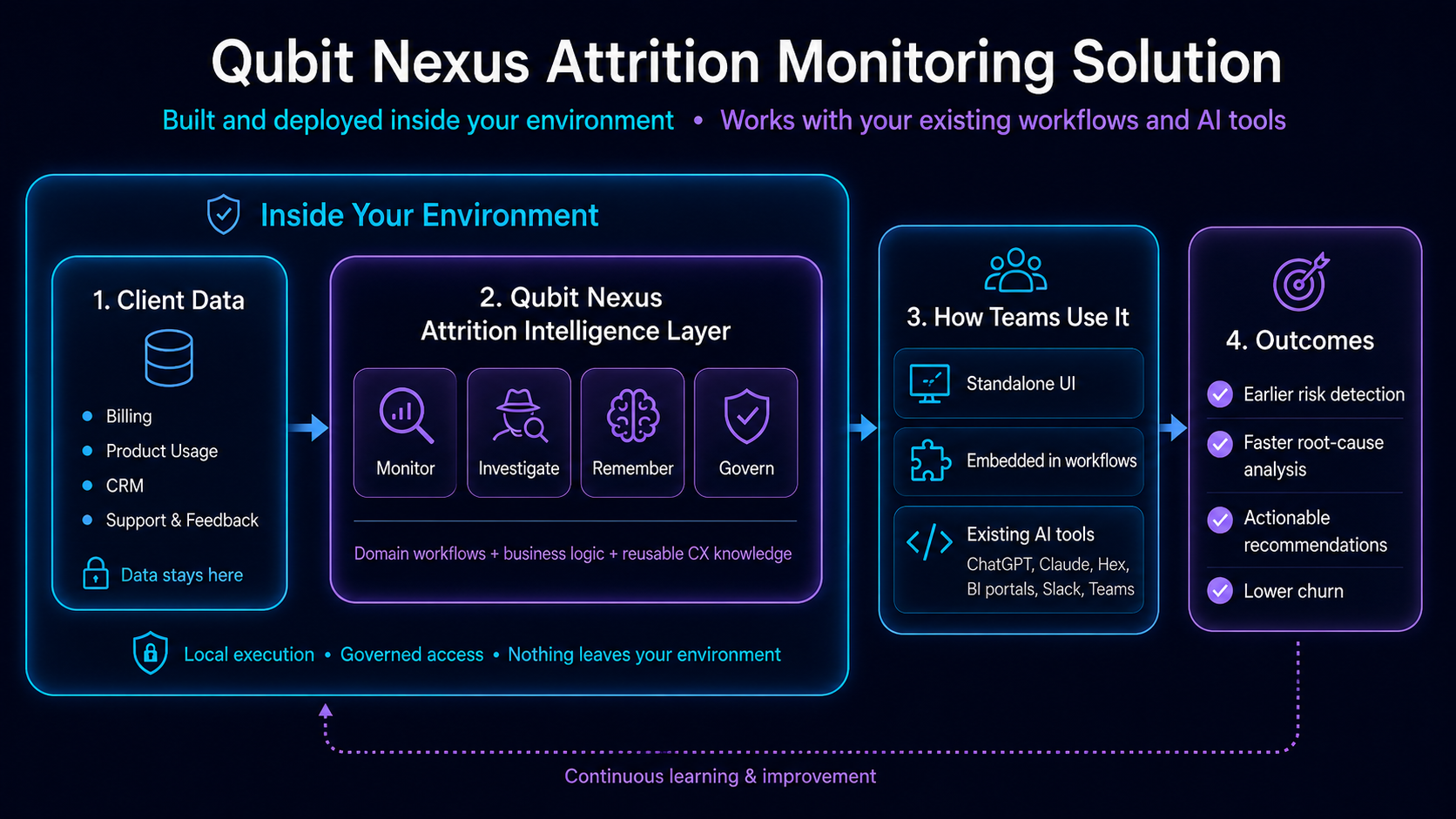
Data, logic, execution, memory, and governance remain under client control.
Teams move from delayed reporting to continuous monitoring, earlier investigation, and repeatable action.
Each run adds approved findings, incident history, and business context back into future monitoring.
When attrition starts to rise, the problem is rarely just detecting the spike. The harder problem is understanding what changed, why it changed, which segments are affected, and what action should be taken before the issue grows.
Traditional analysis often depends on fragmented data pulls, manual SQL or Python work, repeated handoffs between business and technical teams, and one-off reports that lose context over time. By the time answers arrive, the opportunity to intervene may already be reduced.
Attrition increases, but the business team only sees the issue after reporting catches up.
Analysts manually pull data from billing, CRM, product usage, support, survey, and warehouse sources.
Teams explore hypotheses through ad hoc SQL, Python, dashboards, and stakeholder discussions.
Findings are summarized in slides, emails, or reports, but context is often lost after the cycle ends.
The next spike starts a new investigation from scratch.
The AI Monitoring Agent is built and deployed inside the client's environment. It connects to approved data sources, runs deterministic monitoring logic locally, uses AI to guide investigation and explanation, and preserves approved findings in a knowledge layer that improves future runs.
The solution connects to approved customer, billing, CRM, usage, support, survey, and warehouse data without turning the AI layer into an unmanaged data export process.
The core layer monitors attrition, investigates drivers, remembers approved findings, and governs execution through local processing, access controls, and auditability.
Users can ask questions, validate trends, test hypotheses, compare scenarios, drill into incidents, and approve what should be saved as reusable business knowledge.
Teams can use the solution through the Qubit Nexus UI, embedded workflows, APIs, MCP, ChatGPT, Claude, internal copilots, BI portals, Slack, Teams, or other approved tools.
Each run produces incident summaries, model outputs, business explanations, and approved learnings that are reused in future investigations.
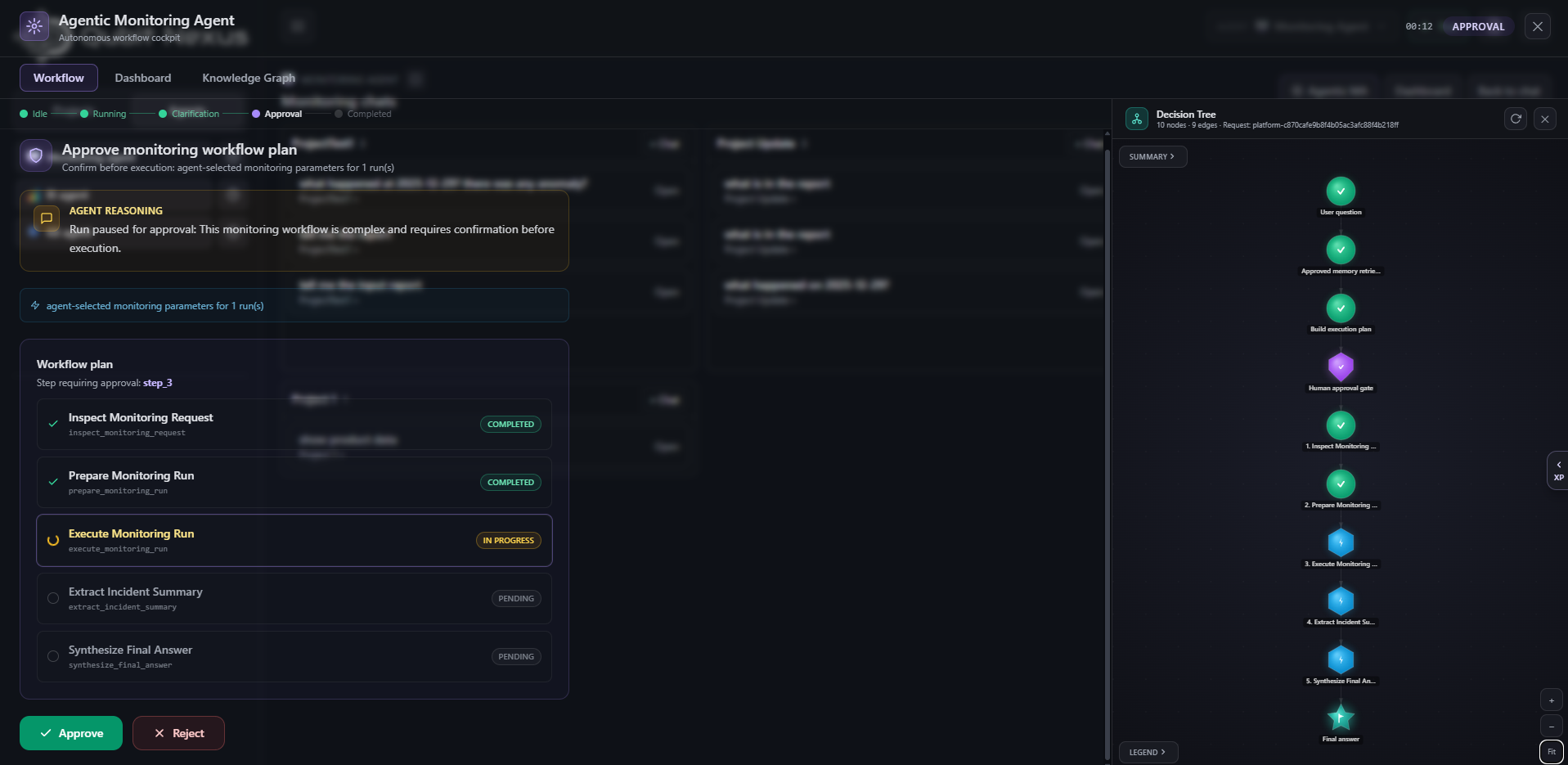
The Monitoring Agent is fully agentic — it first plans and outlines what it will do based on the question, building a clear decision tree of steps. When needed, it asks for clarification and approval before moving forward.
Once the run is complete, the Monitoring Agent provides a summary with key statistics from the deterministic model alongside the trends and findings worth attention.
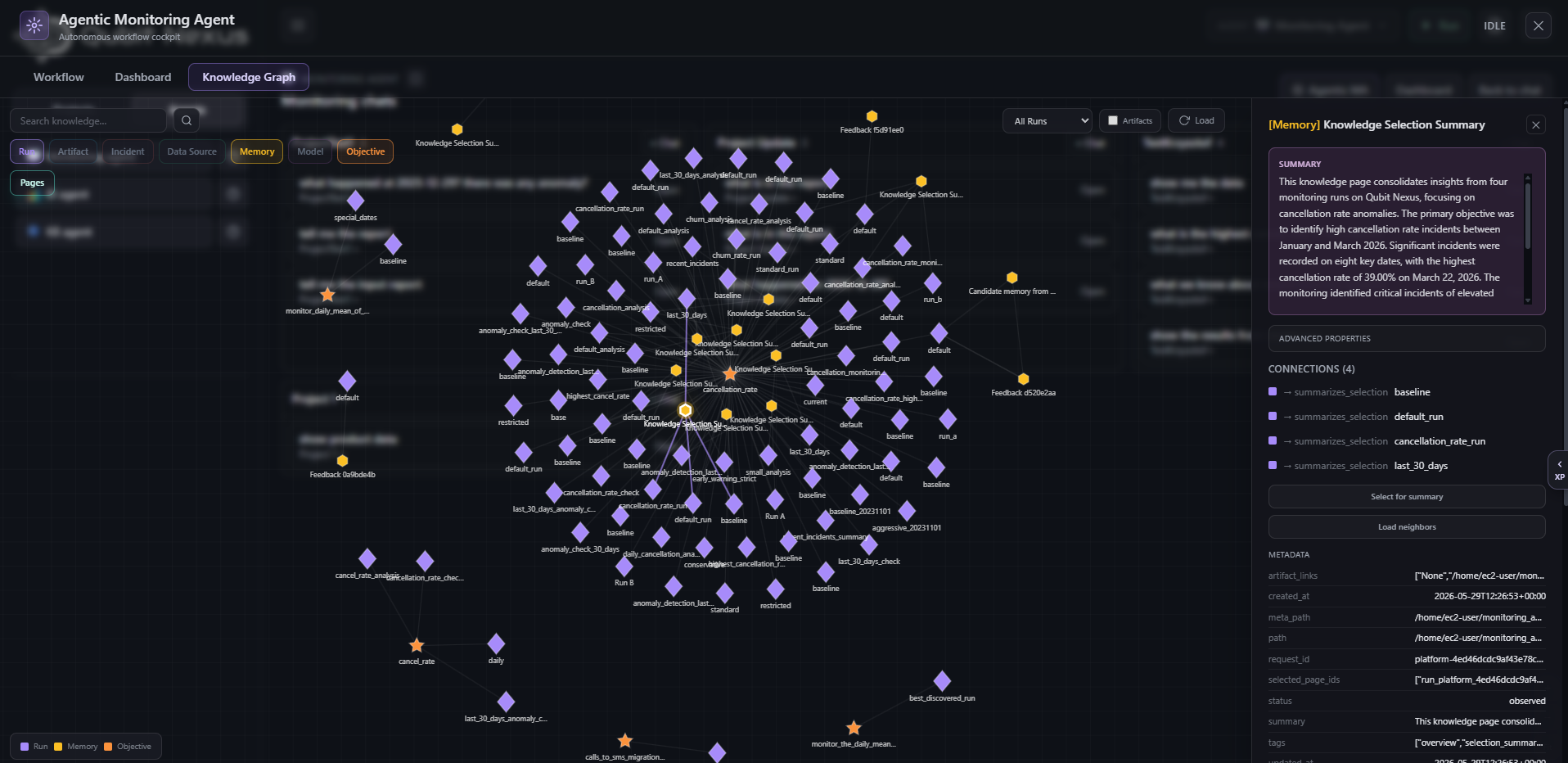
Approved findings, incidents, drivers, and business context are stored in a knowledge graph that the agent operates on. It gives a clear view of what the agent knows, how concepts connect, and what evidence backs each conclusion — and every accepted run feeds back into the graph so the agent keeps learning from your environment.
The Monitoring Agent runs continuously, always looking for clues associated with potential attrition. Teams can also trigger custom runs to explore a specific question whenever needed.
The Monitoring Agent helps users move from "attrition is up" to "here is what changed, where it changed, what likely contributed, what evidence supports the finding, and what we should check next."
The deterministic model provides the monitoring baseline, incident detection, variant comparison, and data-drift checks. The AI layer helps structure the investigation, explain findings in business language, suggest follow-up questions, and preserve approved context.
Business users remain in control. They can validate findings, add context, approve memory, and decide what action should be taken.
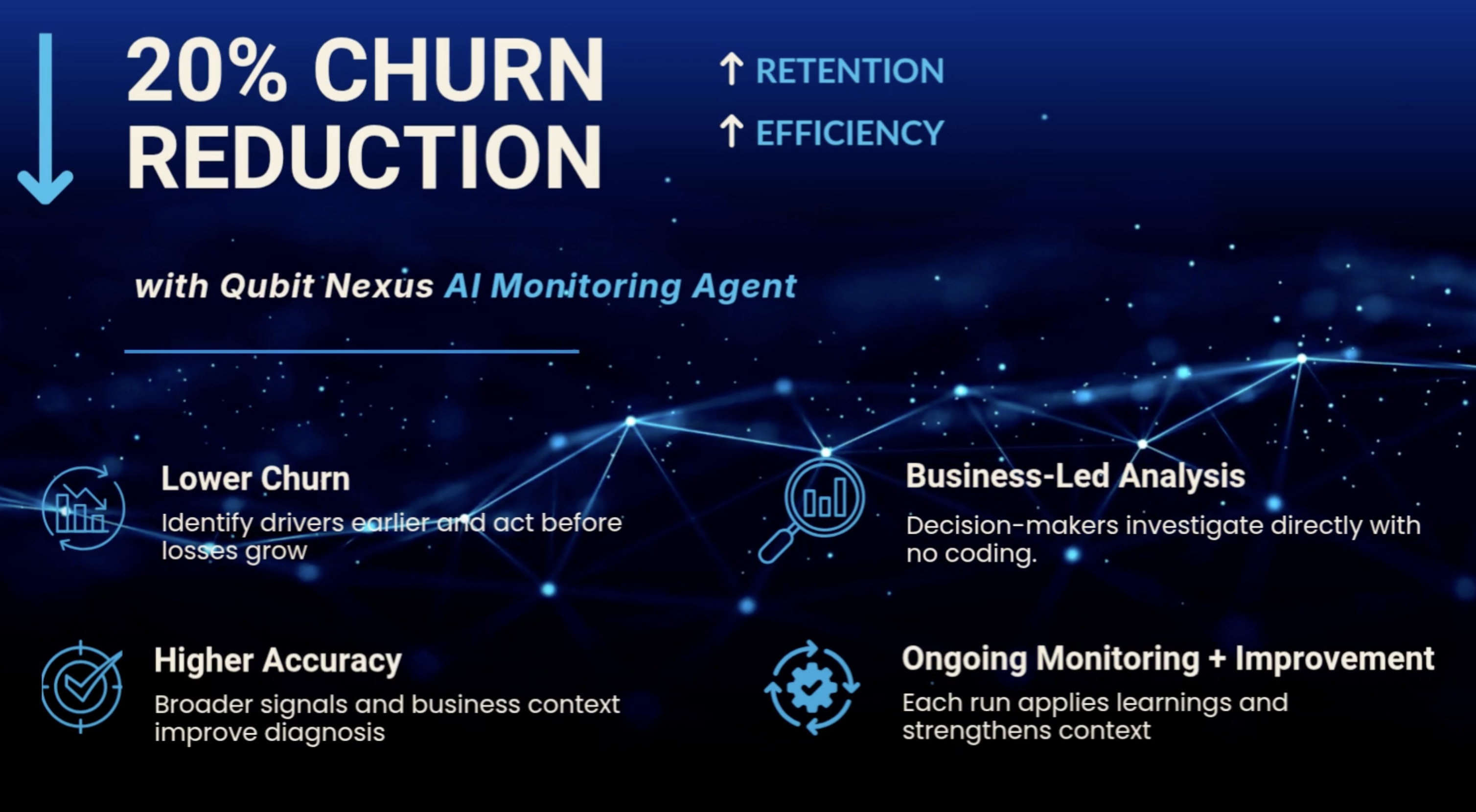
The Monitoring Agent changes the operating model for retention teams. Instead of waiting for manual analysis after churn has already increased, teams can continuously monitor attrition signals, investigate drivers earlier, preserve business context, and reuse prior learnings.
The result is a more proactive, business-led approach to retention: faster diagnosis, fewer repeated investigations, stronger institutional memory, and a clearer path from insight to action.
We bring the full solution pattern, deploy it inside your environment, connect it to your data, and help your team use it.
We do not replace those tools. We add the governed attrition intelligence layer behind them.
We accelerate your team with a proven architecture, reusable components, CX analytics expertise, and implementation patterns.
Qubit Nexus helps CX and retention teams build AI-enabled monitoring solutions inside their own environment — connected to their data, workflows, governance, and existing AI stack.